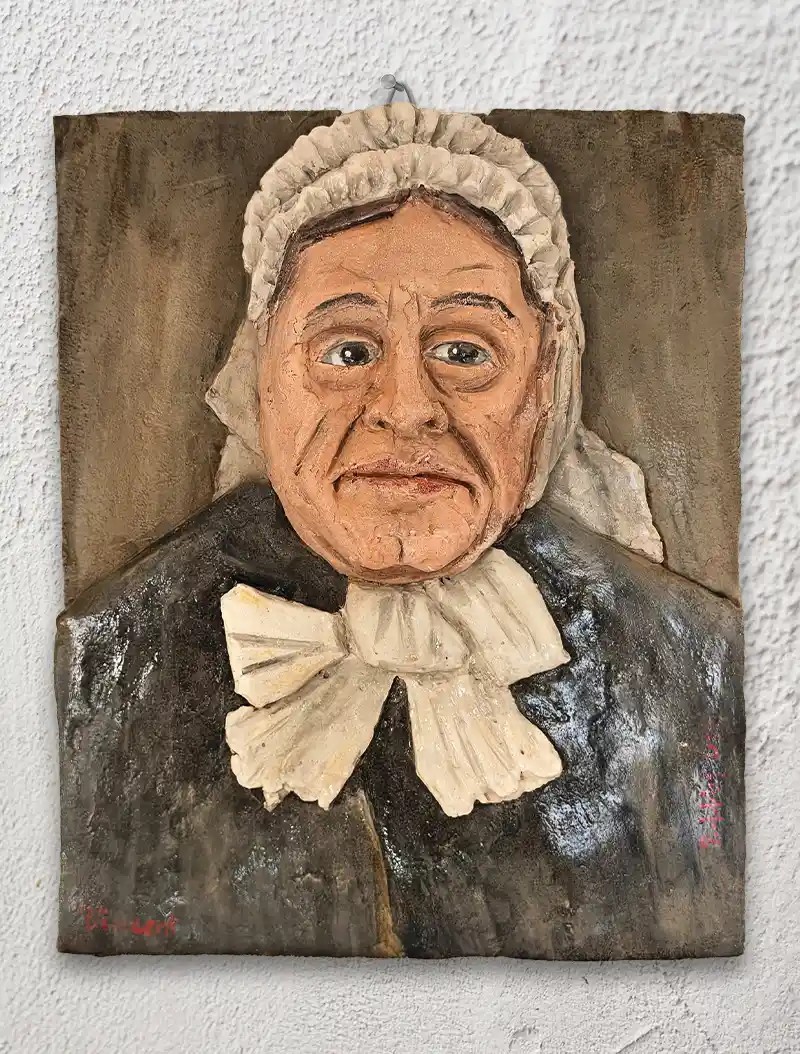
With The Postman’s Wife, Paolo May reinterprets one of the most iconic portraits by Vincent van Gogh, depicting Augustine Roulin, wife of the postman Joseph, a close friend of the artist. This 3D artwork uses mixed media on wood – clay, glazes and colors – to convey dignity and psychological depth. Not a reproduction, but a personal interpretation that transforms an icon of motherhood into a contemporary vision.
Colors in images may appear slightly different or more saturated depending on the device used.
With The Postman’s Wife, Paolo May reinterprets one of the most iconic portraits by Vincent van Gogh, depicting Augustine Roulin, wife of the postman Joseph, a close friend of the artist. This 3D artwork uses mixed media on wood – clay, glazes and colors – to convey dignity and psychological depth. Not a reproduction, but a personal interpretation that transforms an icon of motherhood into a contemporary vision.
Colors in images may appear slightly different or more saturated depending on the device used.
 100% secure shopping thanks to our protected payment systems
 Reliable and fully trackable shipping so you can shop with complete confidence
 Easy and fast returns for all your needs
In 1889, Vincent van Gogh created the portrait known as La Berceuse, meaning “lullaby” in French. The subject was Madame Augustine Roulin, wife of the postman Joseph Roulin, a close friend of the artist.
Van Gogh dedicated this work to the maternal figure as a symbol of comfort and serenity, capable of conveying calm and protection like a lullaby. It is considered one of the most powerful portraits of his Arles period.
In The Postman’s Wife, Paolo May reinterprets this universal theme through a three-dimensional language. The figure emerges in relief thanks to the use of clay, glazes and colors on wood, transforming the flatness of painting into a sculptural presence.
This work is not intended as a copy, but as a tribute and interpretation. May draws inspiration from the bond between Van Gogh and the Roulin family, bringing Augustine’s portrait into a contemporary dimension. In doing so, motherhood and inner strength become timeless themes, still able to resonate through a new artistic language.

Data sheet